
“You should talk to these guys.”


Orange Commercial Credit logo.

—   Serving Clients Nationwide Since 1979   —

Invoice Factoring for Service and Other Industries

(also called accounts receivable financing)

We turn invoices into cash for B2B companies that bill their customers on terms.

Once your client is approved and your
invoice is verified,
we usually send your money within 24 hours.

Before you decide, we show you the numbers in writing: what you get now (“advance”), what’s set aside until your customer pays (“reserve”), and the cost (“fee”).

Industries we see every week:

Trucking Staffing Manufacturing Service Providers Facilities Wholesale Auto body & Collision Repair Machine Shops Other B2B Services

If you bill another business on terms, factoring may work for you, depending on your customer and the paperwork they require.

You might have typed something like “invoice factoring by industry,” “factoring companies near me,” or “get paid before Net-30/45/60/75” into a search.

Either way you need your money
before the
30, 45, 60, or 75-day terms
you gave your customers.

Different industries. Same pattern:
invoice out, customer pays later.

Your customer wants Net-30, Net-60 or higher. To win the job, you agree. But your expenses don’t wait.

The work is done. The invoice is out. Payroll and rent come first.

Materials, payroll, rent, electricity bill, insurance…

The bills keep coming while you wait out those terms. You can put some costs on a card, but the statement comes due before your customer pays.

Wait too long and you’re the one
stuck with late fees or interest.

So what do you do while you’re waiting?

Most delays aren’t the work. It’s the paperwork: missing backup, a mismatch, or the invoice not accepted in the customer’s system yet.

Business owner on the phone managing the many demands of running a business.

Okay. So what’s the fix?

Get Paid on Work You've Already Done

We're Orange Commercial Credit. We buy invoices for work you’ve already done. This is called invoice factoring.

We’ve been doing it since 1979 or for over 45 years! Different economies. Same problem: customers on terms, bills due now.

If you ship B2B and bill on Net-30, Net-60 or higher, factoring lets you get paid on an approved invoice before your customer’s due date.

A client for several years shared this:

“Within a day the money is in my account.”

—Val, Owner and Client Since 2017

Here's how it works with us:

You pick an invoice to sell and send it with the normal backup for your industry (tickets, time sheets, BOL/POD, PO, and other proof your customer asks for).
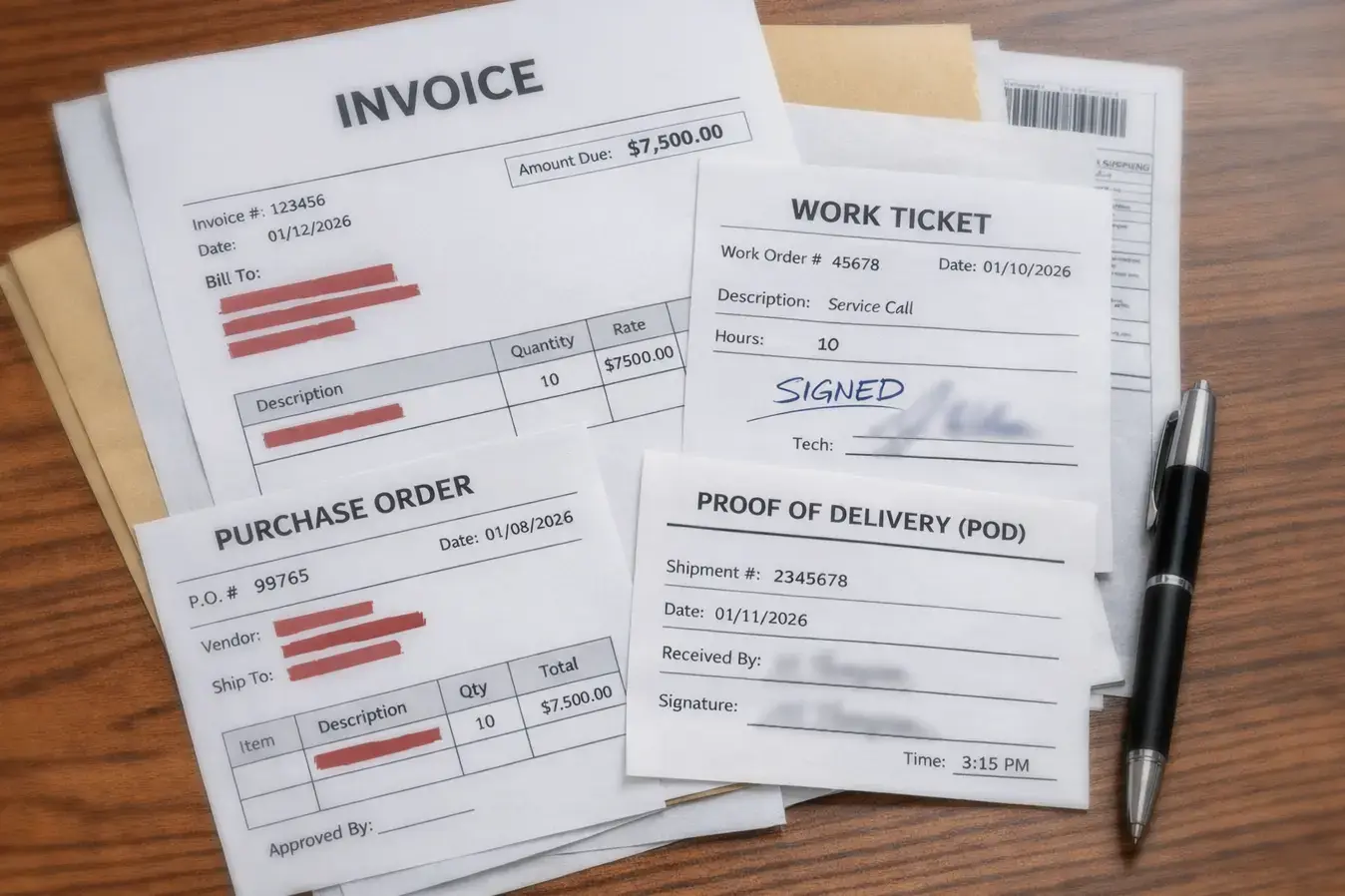
Invoice with PO and proof documents on a desk.

We review the invoice and the backup you send. Once the invoice is approved and you’re set up in our system, we send an up-front payment.

You get your money
before payroll or bills come due.

The up-front payment is called an advance. Depending on your industry, the invoice and your customer, the advance can be up to 90% of the invoice.

When your customer pays in full, on the next cycle you receive the remainder minus our fee, which can range from 1.25% - 5%.

For example, on a $10,000 invoice, a 90% advance would be $9,000.
An $800 reserve and a 2.0% fee ($200) means $800 is returned to you.
(Assumes invoice is paid in full.)

You know how it is: materials, payroll, rent, electric bill, insurance. Those bills don’t wait. That's why getting paid earlier matters.

Over the years we’ve worked with companies across many industries. Many have been with us five years or more.

They stay because the money’s there when they need it and because they value the service they receive.

They have one dedicated account executive who is backed by an experienced team ready to answer all their questions.

Most of our business comes from referrals. Our clients refer because they know their friends will get the same service they do.

Industries We Cover

If you bill business customers on terms, tell us what you do. We can start with one invoice. Here are a few examples of the paperwork different industries require:

  • Janitorial & Facilities Services
    Work order signed. Monthly invoice. MSA/SOW backup.
  • Security Guard Companies
    Post logs + sign-in sheets. Schedule backed up. Then you invoice.
  • Wholesale & Distribution
    PO + BOL/POD. Receiver stamp. Proof of delivery.
  • Oilfield-related Services
    Field ticket + rates. Approved by the pusher. Then you bill.
  • Waste & Recycling Services
    Route ticket + container pull record. Weight ticket when required.
  • Food & Beverage Distribution
    Delivery drop + POD. Shorted/claims paperwork when it happens.
  • B2B Fleet Repair
    Work order + parts list. Unit/VIN and PO on the invoice.
  • Auto Body & Collision Repair
    RO + approved estimate/supplements. Pre/post scan or calibration report when required. Sublet invoice when used.
  • Machine Shops
    PO + packing slip + receiver. FAI/FAIR and MTR/CoC traceability when required. Outside processing certs when required.
  • Facilities Maintenance
    WO + site ID + sign-off. NTE approval when it changes. Check-in/out timestamps and photos (before/during/after) when required.

With us, even if your customer pays on 30, 45, 60, or 75-day terms, you can get paid on an approved invoice before your customer’s due date.


One customer. One invoice. One call.
You get a person, not a menu:
1-800-231-3878

“We’ve been with OCC for 15+ years. They always get us the money we need to keep operations smooth.”

— Peggy, Electronics, Client Since 2006

In the End, It Comes Down to Your Customer

The only way this works is if your customer’s good for it. That’s why our credit check matters.

We’ve been doing this since 1979, and many of our credit team members have been here 10+ years. They check pay history and credit limits every day.

  • Across industries, it means watching customers who pay past their terms, short-pay, dispute, or require specific backup before they accept an invoice.
  • It also means knowing when a customer says Net-30/45/60/75… and when they really pay on a set pay run (like the 15th or end of month).

Our job is to review the invoice + backup, then send the advance after approval.
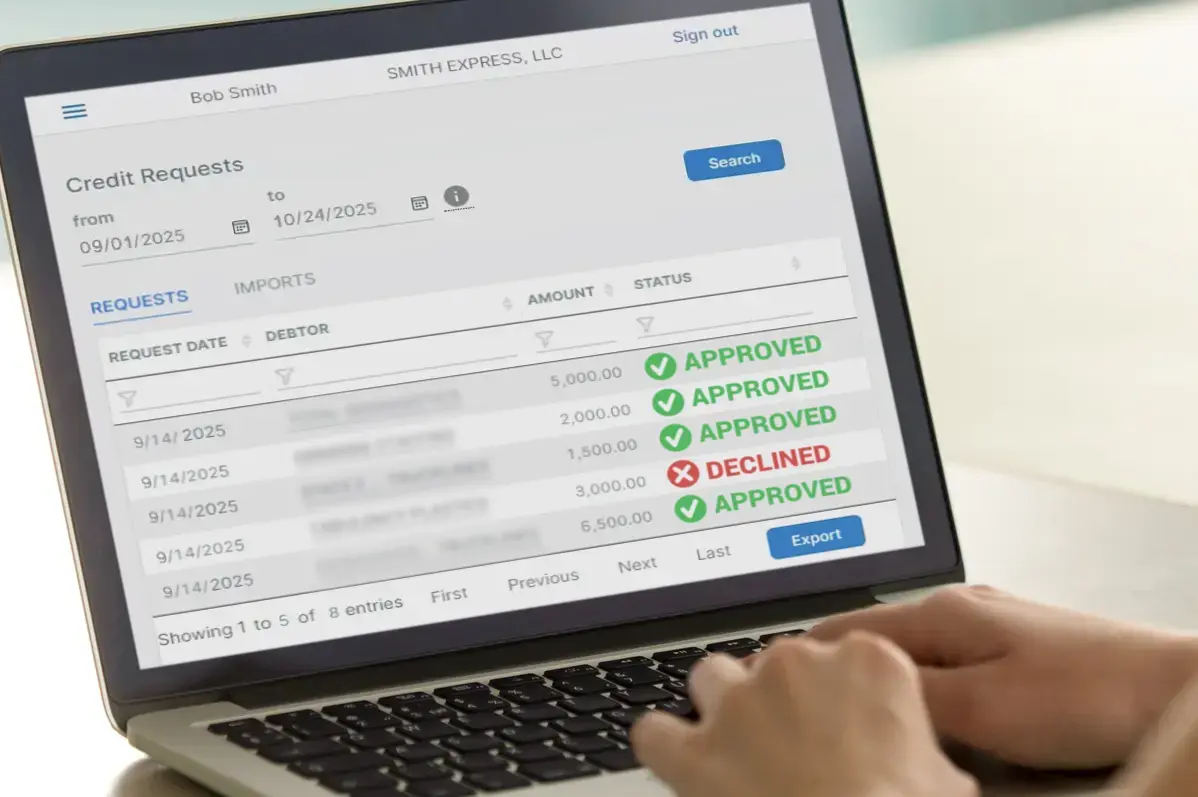
Hands on Computer keyboard screen showing invoice credit approvals and denial.

It’s one thing to hear you’ll get paid...

How It Works in Practice

Here’s what happens, step by step, from the time you send an invoice until the final payment clears.

A client shared how OCC has helped their business with quick access to funds and reliable service:

“We have the capital we need the very day we send invoices in… She understands our client and works with us to process invoices quickly.”

—Jill, Synergy Solutions

step one in invoice factoring

In invoice factoring, the first thing we do is check your customer’s credit. We pull their payment history up front, even before you send us an invoice, because that’s how we decide if we can buy the invoice from you.

step two-send invoice to get approved

Once your customer is approved, you send the invoice with the supporting paperwork, and our team reviews it.
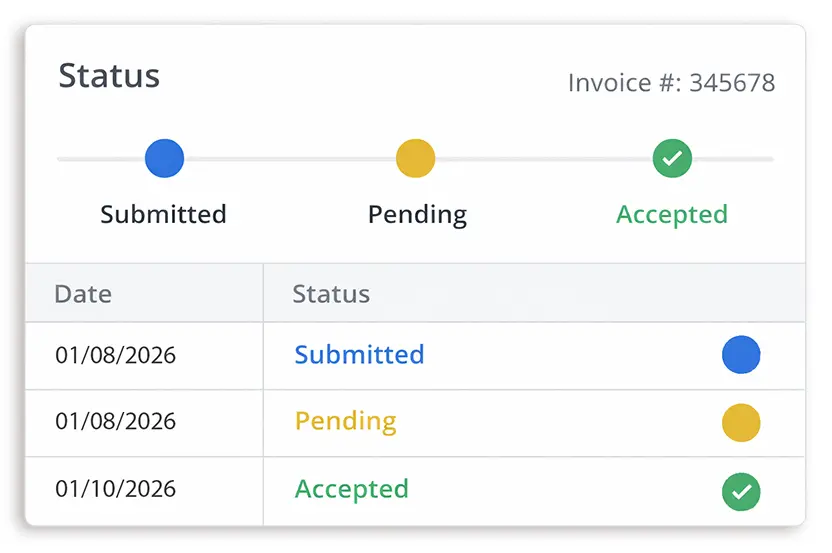
  • By industry, the backup changes (examples: time sheets, service tickets, BOL/POD, PO docs).
  • We review what you send against what the customer asks for (attachments and acceptance rules). It’s a check, not a guarantee every issue is caught.
Graphic showing status from submitted to pending to accepted.

Most of the time it’s not complicated. It’s one missing detail: PO number, line items that don’t match, or missing shipping/receiving proof.

And even after it’s accepted, many customers still pay on their schedule.

Once your invoice is approved and you're set up as a client, we notify your customer to send payment directly to us and confirm they’ve accepted the change.

It doesn’t change the work you did or the price on the invoice. It updates their Accounts Payable on where to send the payment.

step three is funding

The last step is the funding, the part you care about most.

That’s when the money is sent to your account.

On every funding you’ll see:

  • an advance
  • a reserve
  • and our fee (called the discount fee)

Advance

The advance can be up to 90%, depending on the invoice and your customer. Example: on a $10,000 invoice, a 90% advance is $9,000.

Once you’re set up, the steps are the same across all your locations. Whether you’re in one city or running plants in multiple regions, we handle each invoice and its backup the same way.

A client since 2013 put it this way:

“We've been with OCC for over 9 years. Credit checks come back same day… and we get funded when we need it.”

—E.H., President, Pallet Manufacturer (Atlanta, GA)

Reserve

A reserve is when we set aside a small portion until your customer pays. It helps protect you against having to pay us out of pocket for any uncollectible portions of your invoices.

We release the available reserve balance, minus our discount fee, once a month.

Discount fee

The discount fee depends on:

  • how long your customer takes to pay and how strong their credit is.
  • the type of industry, because some carry more disputes or delays than others.
  • the dollar amount of invoices you sell.

Before you agree to anything, we send you the numbers in writing: what you get now (advance), what’s held back (reserve), and our fee.

That's how our factoring works.
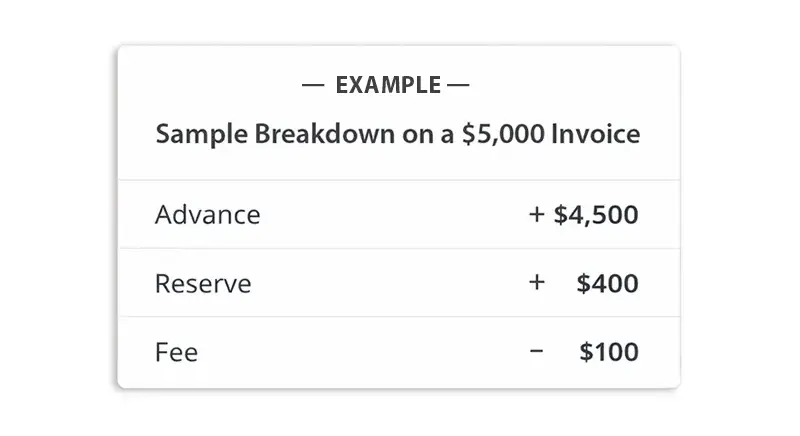
  • You pick an invoice — say a $5,000 order that’s already delivered or service provided.
  • We verify and send most of the money up front, typically within one business day.
  • When your customer pays in full, we deduct our fee and release the remaining reserve on the next cycle.
Simple chart that shows a sample breakdown on a $5,000 invoice, from the $4,500 advance, the $400 reserve, and the $100 discount fee.

Ready to see your numbers? Call and we’ll walk you through one invoice on the phone:
1-800-231-3878

“My account rep and her team are responsive and very easy to work with. Very happy with the relationship.”

— Mac, Precision Contract Manufacturing, North Carolina (Client of 6 years)

Independent by Choice

The difference with us? We’re independent, so we can set terms that fit your business.

We don’t answer to outside investors. We’re privately held. We’re business owners too. We know what it takes to meet payroll and keep the lights on.

Your terms come from us and no one else.

And we also know every company runs a little differently. We don’t drop numbers into a formula. We look at your invoices and your customers.

We base terms on what we see in your invoices and your customers, not on a one-size-fits-all chart.


One manager put it this way:

“We use the scanning program to send in invoices, which took some learning on our behalf, but it’s good now. We have daily email contact with April and she’s so responsive to our needs. We cannot say enough good things about our whole experience with OCC. We love them!”

—Jennifer, Manager and Client Since 2014

In the end, it comes down to trust. Who do you want to rely on when bills don’t wait? Start simple: one customer, one invoice, one call.

1-800-231-3878

Janitorial & Facilities Services

Janitorial staff in office building lobby.

Recurring work. Same buildings. Same schedule. And the same terms: Net-30/45/60/75 — while payroll comes due every week.

The delay is the terms. Then proof decides approval: will your customer accept the invoice with the logs or sign-off they require?

Whether you’re an independent owner or a subcontractor under a national prime, we understand the MSA and SOW requirements that trigger approval and payment.

Site serviced. Invoice out.
You still need your money.

Types of work we see

  • Nightly / weekly janitorial (office, retail, industrial)
  • Medical / healthcare facility cleaning (clinics, surgical centers)
  • Day porter service (restrooms, high-touch points, lobby maintenance)
  • Floor & carpet care (strip & wax, burnishing, encapsulation cleaning)
  • Post-construction final clean (ready-for-occupancy)
  • Turnovers / make-ready (property management, commercial)
  • Terminal & high-traffic sites (transit hubs, stadiums, airports)

A common question is:
What if the customer kicks it back?

If they say “missing backup,” the invoice can come back unapproved. That’s common in VMS/MSP portals. You send the proof they require and we compare to see if it matches. It's a check, not a guarantee every issue is caught.

Paperwork usually needed with
janitorial / facilities invoices

  • Invoice (site name, service period, PO / work order if used)
  • Service logs / checklists (daily task proof)
  • Sign-in sheets (proof the crew was on site, if required)
  • Client sign-off (portal approval or email confirmation)
  • MSA / SOW (master service agreement + scope of work, when needed)
  • COI (active certificate of insurance, if required)
  • Portal confirmation (submission / portal access to confirm approvals and payment status)

The steps (what happens next)

  • You complete the service and invoice your customer.
  • We review the invoice and the normal backup your customer requires.
  • If it’s approved, we send the the money to your bank.
  • Your customer pays us.
  • Available reserve released (minus the fee) on the next cycle.

For example, on a $10,000 invoice, a 90% advance would be $9,000. An $800 reserve and 2.0% fee ($200) means $800 is returned to you, assuming the invoice is paid in full.

Your fee depends on the customer, the terms and the invoice, and you see the advance, reserve and fee in writing before you agree to anything.


Quick fit check (what has to be true):

  • You bill business customers (not consumers).
  • Your invoice matches the site and the service period.
  • You can show the proof the customer requires (logs / sign-off / portal acceptance).
  • The customer has a track record of paying according to terms.

Not sure your janitorial invoice will fund?
Call us and we’ll let you know.
1-800-231-3878


Security Guard Companies

Security guard outside a commercial building using a radio

Your guards work the shift. You invoice the customer. Then you wait on net terms.

The terms are the wait. And approval depends on proof: if the logs or sign-off aren’t there, the invoice can come back unapproved.

Whether you use paper logs or exported reports from systems like TrackTik, Silvertrac, or Deputy, we check the shift logs and approval first so the invoice doesn’t get rejected for “missing proof.”

Shift covered. Invoice out.
You still need your money.

Types of security work we see

  • Unarmed guard service (commercial and retail sites)
  • Armed guard service (when the customer requires it and the backup matches)
  • Mobile patrol (routes and check-ins)
  • Access control / lobby security (business buildings)
  • Construction site security (security service invoices — not construction draw invoices)
  • Fire watch (B2B billing with the required logs)
  • Event security (venues and scheduled coverage)
  • Loss prevention (retail and distribution sites)

A common question is:
“What if the customer kicks it back?”

If they say “missing logs,” approval can stop and the invoice can get kicked back. So we focus on your DARs (daily activity reports), sign-in logs, and acceptance confirmation first.

Paperwork usually needed with security invoices

  • Invoice (site name, service period, PO / work order if used)
  • Time sheets (hours and dates) / shift schedule
  • Daily activity reports (DARs) / shift reports (paper or exported)
  • Sign-in / sign-out proof (badge logs, gate logs, visitor logs—if required)
  • Client approval (email sign-off or portal “accepted” status)
  • State license (your private security license, if required for your contracts)
  • Certificate of insurance (COI, if required by the customer)
  • Lien waivers (conditional and unconditional, for construction site security projects when required)
  • Portal confirmation (submission / portal access to confirm approvals and payment status)

The steps (what happens next)

  • You provide the security service and invoice your customer.
  • We review the invoice and the backup your customer requires.
  • If it’s approved, we send the wire.
  • Payment posts to your bank.
  • Your customer pays us.
  • Available reserve released (minus the fee) on the next cycle.

For example, on a $10,000 invoice, a 90% advance would be $9,000. An $800 reserve and 2.0% fee ($200) means $800 is returned to you, assuming the invoice is paid in full.

Your fee depends on the customer, the terms and the invoice, and you see the advance, reserve and fee in writing before you agree to anything.


Quick fit check (what has to be true):

  • You bill business customers (not consumers).
  • Your invoice matches the site and the service period.
  • You can show the proof the customer requires (logs / sign-off / acceptance).
  • The customer has a track record of paying according to terms.

Not sure your security invoice will fund?
Call us and we’ll tell you.
1-800-231-3878


Wholesale & Distribution

Warehouse loading dock tracking shipments

You ship. You deliver. You invoice. Then you wait on Net terms.

The delay is the terms. Then delivery proof decides approval: will your customer accept the invoice with the PO match and POD they require?

Whether you invoice manually or use EDI (electronic data interchange) for big-box retailers, the goal is the same: show the PO match, show the delivery, and show acceptance.

If your customer is a retailer, you also deal with deductions: chargebacks, allowances, shortages, and pricing claims. We look for those risk points early so you see them early.

Goods delivered. Invoice out.
You still need your money.

Types of distribution work we see

  • CPG suppliers (consumer packaged goods, apparel, electronics)
  • Retail fulfillment (shipments to big-box distribution centers)
  • LTL and FTL shipments to regional DCs (distribution centers)
  • Regional food & beverage (tight windows and proof requirements)
  • Industrial supply (job-site deliveries billed B2B with job/PO references)
  • Medical & lab supply (B2B shipments with strict acceptance rules)
  • Import / export & brokerage (B2B invoices with customs and delivery backup)
  • E-commerce B2B (bulk fulfillment to business customers and marketplaces)

A common question is:
“What if they short-pay or charge it back?”

If the customer claims a shortage, a pricing error, or “missing POD,” approval can stop and the invoice can get rejected. So we focus on PO match, delivery proof, and acceptance confirmation up front.

Paperwork usually needed with wholesale / distribution invoices

  • Invoice (ship-to, service/delivery date, PO number, line-item pricing)
  • Purchase order (PO) / order confirmation (if the customer requires it)
  • Bill of lading (BOL) / packing list
  • Proof of delivery (POD) (signed receiver or carrier confirmation)
  • Receiving proof (if the customer requires receiving before acceptance)
  • Price agreement / rate sheet (for pricing disputes and deductions)
  • Chargeback / deduction paperwork (when the customer issues an allowance or claim)
  • Retail portal confirmation (examples: Amazon Vendor Central, Walmart Retail Link—if that’s where acceptance is shown)

Whether your customer uses a retailer portal or EDI, we work with the exported confirmation and acceptance proof your customer provides.

The steps (what happens next)

  • You deliver the goods and invoice your customer.
  • We review the invoice and the backup your customer requires.
  • If it’s approved, we send the wire.
  • Payment posts to your bank.
  • Your customer pays us.
  • Available reserve released (minus the fee) on the next cycle.

For example, on a $10,000 invoice, a 90% advance would be $9,000. An $800 reserve and 2.0% fee ($200) means $800 is returned to you, assuming the invoice is paid in full.

Your fee depends on the customer, the terms and the invoice, and you see the advance, reserve and fee in writing before you agree to anything.


Your invoice may be a fit for factoring if:

  • You bill business customers (not consumers).
  • Your invoice matches the PO (if used) and the delivery (BOL/POD).
  • You can show acceptance proof (portal or EDI confirmation) when the customer requires it.
  • The customer has a track record of paying according to terms.

Not sure your wholesale invoice will fund?
Call us and we’ll tell you.
1-800-231-3878


Oilfield-related Services

Oilfield workers at a wellhead with a service truck and pump jack in the background.

The work is done on site. The ticket is signed. You invoice. Then you wait on terms.

The terms create the delay. Then field paperwork decides approval.

Ticket signed. Invoice out.
You still need your money.

Types of oilfield work we see

  • Roustabout & flowback crews (site maintenance and production support)
  • Water transfer & fluid handling (run sheets and disposal tickets when required)
  • Hotshot & winch truck services (equipment hauling with delivery proof when required)
  • Environmental & containment (site remediation and spill response)
  • Casing & tubular services (billed against specific AFE numbers when required)
  • Site prep & pad services (location support billed B2B)
  • Midstream maintenance (pipeline and compressor station support)

A common question is:
“What if the invoice is stuck in the portal?”

If your invoice shows “pending,” you aren’t getting paid yet. Some customers run approvals through portals like OpenInvoice, Oildex, or Cortex. We focus on proof of submission, portal status, and matching the job details so you’re ready when it flips to “approved.”

Paperwork usually needed with oilfield invoices

  • Invoice (job number, AFE number, and lease name when required)
  • Signed field tickets (matched to the invoice and verified on site)
  • Rate sheet / MSA (to confirm agreed day rates or hourly rates when required)
  • Portal screenshot (proof of submission and the current status, when they use OpenInvoice, Oildex, Cortex, or similar)
  • Run sheets / service logs (water hauling, transfer, or recurring activity when required)
  • Disposal tickets (when disposal is part of the invoice)
  • Work order / PO (if the customer requires it)
  • Client sign-off (email approval or portal approval)
  • Certificate of insurance (COI, if required by the customer)

The steps (what happens next)

  • You complete the work and invoice your customer.
  • We review the invoice and the backup your customer requires.
  • If it’s approved, we send the money to your bank.
  • Your customer pays us.
  • Available reserve released (minus the fee) on the next cycle.

For example, on a $10,000 invoice, a 90% advance would be $9,000. An $800 reserve and 2.0% fee ($200) means $800 is returned to you, assuming the invoice is paid in full.

Your fee depends on the customer, the terms and the invoice, and you see the advance, reserve and fee in writing before you agree to anything.


Is your invoice a good fit for factoring?

  • You bill business customers (not consumers).
  • Your invoice matches the job number and the ticket (and AFE/lease details when required).
  • Either portal status confirms or acceptance proof when the customer requires it.
  • The customer has a track record of paying according to terms.

Not sure your oilfield service invoice will fund? Call us and we’ll tell you.
1-800-231-3878


Local & Municipal Suppliers

Municipal maintenance crew working near a city water line with safety cones in place

You deliver the goods or services. You invoice the city, county, or local authority. Then you wait on the payment cycle.

The real question is usually simple: “Is this invoice clean enough to pass three-way match (invoice, PO, and receiving)?”

City and county invoices can take longer because they run on match rules. If the PO, receiving, and attachments don’t line up, it sits. So we don’t answer that with a blanket “yes” online. You call, we look at one invoice, and tell you “yes” or “no.”

Work delivered. Invoice out. You still need your money.

Types of local and municipal suppliers we see

  • Cities & counties (public works, parks, utilities, and service contracts)
  • Parks and recreation (supplies, repairs, and support services)
  • Transit & housing authorities (facility support and operations)
  • Local utilities & water districts (materials, parts, and maintenance services)
  • Emergency repairs (work moves fast; paperwork catches up after)

What you might be wondering:
“Why do city and county invoices take longer?”

Usually it’s the three-way match (invoice, PO, and receiving). If one piece is missing, it sits. And the clock often doesn’t start until the invoice is marked “received.” We focus on the paperwork and receiving/acceptance up front so you don’t lose weeks to a technicality.

Paperwork usually needed with local and municipal supplier invoices

  • Invoice (formatted to the payer’s rules with contract/PO numbers and remit-to)
  • Contract / award notice (shows the invoicing path and any assignment language)
  • Purchase order (PO) (the specific order tied to the delivery or service period)
  • PO line items (line numbers and descriptions when required)
  • Proof of delivery / acceptance (delivery ticket, receiving report, or sign-off—when required)
  • Receiving report / inspector sign-off (when required)
  • W-9 / COI (when required)
  • Portal confirmation (submission / portal access to confirm approvals and payment status)
  • Vendor portal status (submitted / received / approved when available)
  • Evidence it was received (timestamped portal “Received” status or email—when available)

The steps (what happens next)

  • You deliver the work and invoice the city, county, or local authority (or the prime, if that’s the contract path).
  • We review the invoice and the backup the payer requires.
  • If it’s approved, we send the wire.
  • Payment posts to your bank.
  • Your customer pays us.
  • Available reserve released (minus the fee) on the next cycle.

For example, on a $10,000 invoice, a 90% advance would be $9,000. An $800 reserve and 2.0% fee ($200) means $800 is returned to you, assuming the invoice is paid in full.

Your fee depends on the customer, the terms, and the invoice, and you see the advance, reserve, and fee in writing before you agree to anything.


Is your invoice a good fit for local and municipal suppliers factoring?

  • You bill business or local public payers (not consumers).
  • Your invoice matches the contract/PO and the delivery or service period.
  • You can show receiving/acceptance when the payer requires it (receiving report, portal status, or sign-off).
  • The payer has a track record of paying according to terms.

Not sure your city or county invoice will fund? Call us and we’ll tell you.
1-800-231-3878
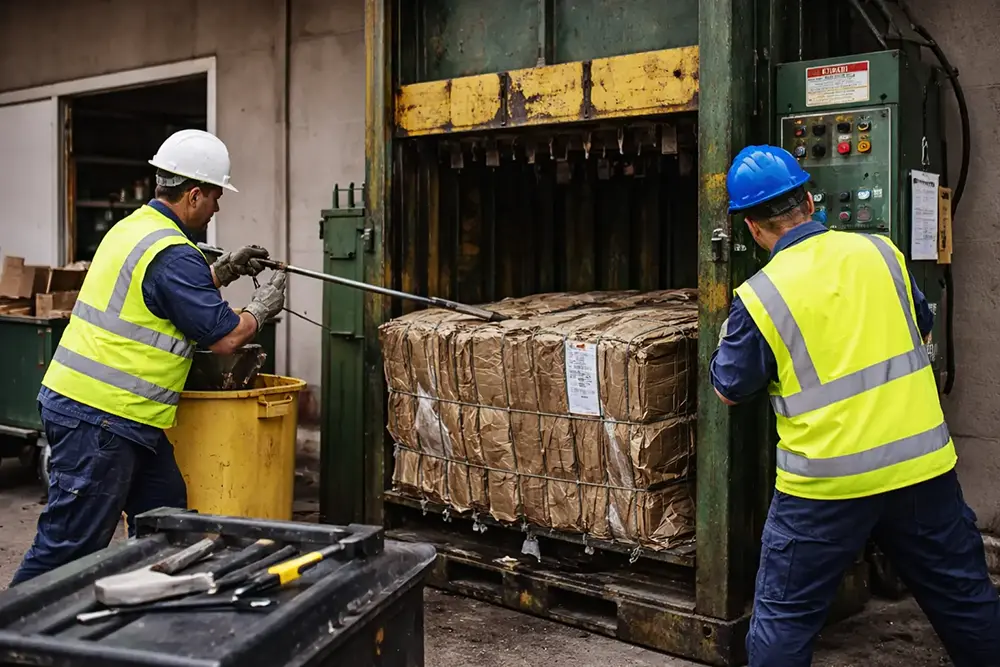

Waste & Recycling Services

Workers operating a cardboard baler with a compressed bale

You run the route. You pick up. You haul. You invoice. Then you wait on terms.

The payment cycle creates the delay. Then proof decides approval: your customer has to accept the invoice with the tickets and backup they require.

In this business, your customer can hold payment if a scale ticket is missing or an overage fee isn’t documented. So we focus on tickets, receipts, and acceptance proof up front.

Route completed. Invoice out. You still need your money.

Types of waste and recycling work we see

  • Commercial MSW routes (scheduled front-load / rear-load pickups)
  • Roll-off & container service (deliver, haul, and swap with weight tickets when required)
  • Industrial & liquid waste (B2B generator accounts and scheduled hauls)
  • Construction debris (C&D) (hauling invoices, including lien waivers when required)
  • Compactor & baler service (scheduled pulls and maintenance calls)
  • Recycling & scrap hauling (multi-stop commercial routes)
  • Medical & specialized waste (B2B billing with required manifest documentation)
  • Landfill / transfer station support (inter-facility hauling and load transfers)

A common question is:
“What if they dispute it?”

If the customer says “missing ticket,” “no gate receipt,” or “overage not approved,” approval can stop and the invoice can get kicked back. We focus on scale tickets, manifests, gate receipts, and portal acceptance so it’s less likely to get rejected for a paperwork error.

Paperwork usually needed with waste / recycling invoices

  • Invoice (site address, container ID when used, and service dates)
  • Scale / weight tickets (landfill or transfer station receipts, when required)
  • Service tickets / manifests (signed proof of pickup or disposal)
  • Route logs (for multi-stop commercial contracts, when required)
  • MSA / rate sheet (pull fees, tonnage rates, overages—when used)
  • Lien waivers (when hauling for construction sites or primes, if required)
  • Client sign-off (email approval or portal approval—when used)
  • Portal confirmation (submission / portal access to confirm approvals and payment status)

The steps (what happens next)

  • You complete the service and invoice your customer.
  • We review the invoice and the backup your customer requires.
  • If it’s approved, we send the wire.
  • Payment posts to your bank.
  • Your customer pays us.
  • Available reserve released (minus the fee) on the next cycle.

For example, on a $10,000 invoice, a 90% advance would be $9,000. An $800 reserve and 2.0% fee ($200) means $800 is returned to you, assuming the invoice is paid in full.

Your fee depends on the customer, the terms and the invoice, and you see the advance, reserve and fee in writing before you agree to anything.


Is your invoice a good fit for factoring?

  • You bill business customers (not consumers).
  • Your invoice matches the site and the service dates.
  • You can show the proof the customer requires (tickets / receipts / manifests / acceptance).
  • The customer has a track record of paying according to terms.

Not sure your waste service invoice will fund? Call us and we’ll tell you.
1-800-231-3878


Food & Beverage Distribution

Beverage distribution warehouse loading drink pallets onto a trailer

You load the order. You deliver on the window. You invoice. Then you wait on terms.

Payment follows the terms. Then delivery proof decides approval: your customer has to accept the invoice with the POD and backup they require.

In food and beverage, paperwork decides the timeline: PO match, receiving stamps, and temperature proof when cold-chain is involved. If proof is missing, the customer can reject the invoice and you have to resend it.

Delivery made. Invoice out.
You still need your money.

Types of food & beverage work we see

  • Broadline distribution (supplying restaurants, schools, and commercial kitchens)
  • Grocery & retail replenishment (strict documentation requirements)
  • Cold-chain & perishables (temperature logs and seal verification when required)
  • Beverage wholesalers (scheduled routes with recurring billing)
  • CPG food brands (selling into big-box DCs and regional warehouses)
  • Produce & meat purveyors (short shelf-life goods with tight delivery windows)
  • Institutional food service (B2B billing for hospitals and corporate campuses)

A common question is:
“What if there’s a discrepancy?”

In food and beverage, a line-out on the POD (shorts, damages, or a missed window) can hold up approval. We focus on PO match, receiving stamps, and temperature proof up front so it’s less likely to turn into a credit memo or delivery dispute.

Paperwork usually needed with food & beverage invoices

  • Invoice (correct ship-to and SKU-level detail when required)
  • Purchase order (PO) (the original order from the buyer)
  • Signed POD (proof of delivery with receiving stamp or electronic sign-off)
  • Temperature / reefer logs (for cold-chain verification when required)
  • Seal verification (when the customer requires it)
  • Lumper receipts (when unloading fees were charged to the invoice)
  • Receiving discrepancy notes (shorts, damages, returns—when issued)
  • Portal confirmation examples (iTradeNetwork or FoodLogiQ—when that’s where acceptance is shown)

The steps (what happens next)

  • You deliver the goods and invoice your customer.
  • We review the invoice and the backup your customer requires.
  • If it’s approved, we send the wire.
  • Payment posts to your bank.
  • Your customer pays us.
  • Available reserve released (minus the fee) on the next cycle.

For example, on a $10,000 invoice, a 90% advance would be $9,000. An $800 reserve and 2.0% fee ($200) means $800 is returned to you, assuming the invoice is paid in full.

Your fee depends on the customer, the terms and the invoice, and you see the advance, reserve and fee in writing before you agree to anything.


Is your invoice a good fit for factoring?

  • You bill business customers (not consumers).
  • Your invoice matches the PO and the delivery (POD).
  • You can show receiving and acceptance proof when the customer requires it (stamp, portal, or sign-off).
  • The customer has a track record of paying according to terms.

Not sure your food distribution invoice will fund? Call us and we’ll tell you.
1-800-231-3878


B2B Fleet Repair

Truck repair bay with an invoice on a clipboard in the foreground

The truck is in the bay. The work is done. You invoice the fleet or business account. Then you wait on terms.

Payment follows the terms. Then repair proof decides approval: your customer has to accept the invoice with the authorization and sign-off they require.

Fleet billing is paperwork-driven: authorization, unit numbers, labor lines, parts lines, and sign-off. If one item is missing, the customer can reject the invoice and you have to resend it.

Repair completed. Invoice out.
You still need your money.

Types of fleet repair work we see

  • Fleet maintenance & PMs (scheduled preventative maintenance and DOT inspections)
  • Road service & emergency calls (B2B calls with dispatch and arrival proof)
  • Diesel & heavy equipment repair (engine, fuel, and cooling system overhauls)
  • Trailer & reefer repair (doors, floors, and refrigeration unit service)
  • Tire programs (commercial unit-level billing and scrap tracking when required)
  • Fleet management billing (invoices submitted through fleet portals like ARI or Element)
  • Parts supply (B2B parts sales with signed delivery tickets)

Important distinction: this section is for commercial repair billing, not consumer repair invoices.

A common question is:
“What if they won’t pay without a PO or authorization code?”

In fleet billing, approval can stop if an authorization code is missing or the unit number is wrong. We focus on RO matching, labor approval, and portal acceptance to reduce the chances of an invoice getting kicked back later.

Paperwork usually needed with fleet repair invoices

  • Invoice (unit number/VIN, mileage, service dates, labor/parts breakdown)
  • Repair order (RO) / authorization (signed or digital approval from the fleet manager)
  • Parts documentation (packing slips or proof of purchase for high-ticket items, when required)
  • Completion sign-off (driver signature or fleet manager “approved” status, when required)
  • Rate sheet (to verify labor rates against the contract, when used)
  • Portal confirmation (portal access to confirm approvals and payment status)

The steps (what happens next)

  • You complete the repair and invoice the fleet or business customer.
  • We review the invoice and the backup your customer requires.
  • If it’s approved, we send the wire.
  • Payment posts to your bank.
  • Your customer pays us.
  • Available reserve released (minus the fee) on the next cycle.

For example, on a $10,000 invoice, a 90% advance would be $9,000. An $800 reserve and 2.0% fee ($200) means $800 is returned to you, assuming the invoice is paid in full.

Your fee depends on the customer, the terms and the invoice, and you see the advance, reserve and fee in writing before you agree to anything.


Is your invoice a good fit for factoring?

  • You bill business customers (not consumers).
  • Your invoice matches the unit/VIN and the authorized work.
  • You can show authorization and acceptance proof when the customer requires it (RO / portal).
  • The customer has a track record of paying according to terms.

Not sure your fleet repair invoice will fund?
Call us and we’ll tell you.
1-800-231-3878

Auto Body
& Collision Repair

Collision repair technician reviewing a repair order next to a vehicle in a body shop

You tear down. You repair. You paint. You deliver. You invoice. Then you wait on terms.

The terms are the wait. And approval depends on documentation: if the approval and sign-off aren’t there, the invoice can come back unapproved.

In collision repair, insurers, TPAs, fleets, and dealers can kick back an invoice if it’s not on the approved final, a final supplement wasn’t approved, a sublet invoice is missing, or a scan/calibration report is missing when they require it. So we check the RO, the approved estimate + supplements, and the required backup up front to reduce the chances of an invoice getting kicked back later.

Repair done. Invoice out.
You still need your money.

Types of auto body work we see

  • Insurance claim repairs (DRP and non-DRP)
  • Fleet & commercial accounts (service vans, delivery fleets)
  • Dealer recon (used-car reconditioning)
  • Heavy truck / commercial collision (when billed B2B)
  • ADAS scans & calibrations (sublet or in-house, when billed)
  • EV/Hybrid procedures (documented steps when required)
  • Sublet work (glass, towing, calibrations—when invoiced through the shop)
  • Storage & related fees (when approved and documented)

A common question is:
“What if they kick it back?”

If they say “not on the approved final,” “supplement not approved,” “missing sublet invoice,” or “missing scan report,” approval can stop and the invoice can come back unapproved. Prior to funding, we are your second set of eyes on what they require on an invoice, so it’s less likely to get kicked back for a paperwork miss.

Paperwork usually needed with auto body invoices

  • Invoice (RO number, dates, and payer name)
  • Repair order (RO) (closeout / completion paperwork)
  • Estimate (original and final, when used)
  • Estimate attachment (CCC/Mitchell/Audatex—when used)
  • Supplement approvals (final supplement approval, when there’s a supplement)
  • Pre- and post-repair scan reports (and calibration report when required)
  • Sublet invoice(s) (calibration, glass, towing—when used)
  • Authorization / approvals (including any sublet approvals when used)
  • Delivery / completion sign-off (signature, email approval, or portal approval)
  • OEM procedure / position statement (when the insurer disputes the method)
  • Photos / documentation (when the payer requires it)
  • Parts invoices (when required to support the final bill)
  • Portal confirmation (submission / portal access to confirm approvals and payment status)

The steps (what happens next)

  • You complete the repair and invoice your customer.
  • We review the invoice and the backup your customer requires.
  • If it’s approved, we send the wire.
  • Payment posts to your bank.
  • Your customer pays us.
  • Available reserve released (minus the fee) on the next cycle.

For example, on a $10,000 invoice, a 90% advance would be $9,000. An $800 reserve and 2.0% fee ($200) means $800 is returned to you, assuming the invoice is paid in full.

Your fee depends on the customer, the terms and the invoice, and you see the advance, reserve and fee in writing before you agree to anything.


Is your invoice a good fit for factoring?

  • You bill business customers (not consumers).
  • Your invoice matches the RO, the service dates, and the final approved amount.
  • You can show the documentation they require (RO / estimate / approvals / scan report / sublet invoice / sign-off—when required).
  • The customer has a track record of paying according to terms.

Not sure your collision repair invoice will fund? Call us and we’ll tell you.
1-800-231-3878
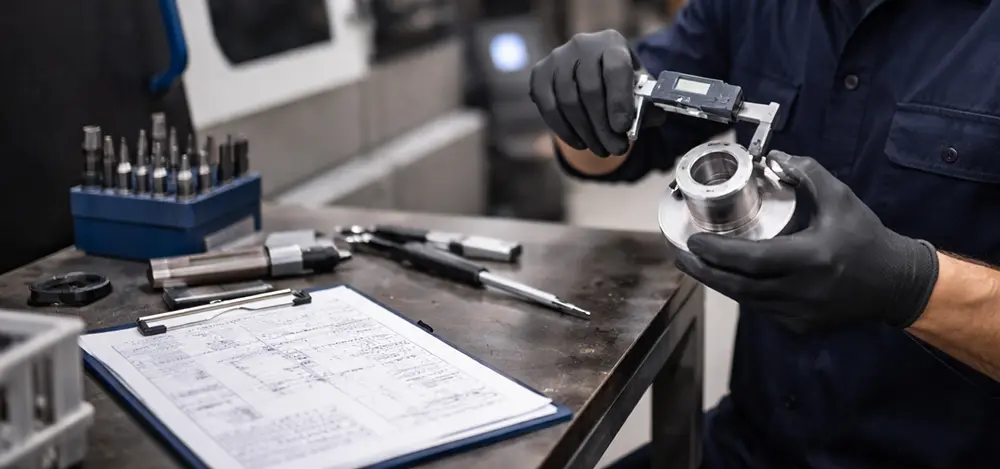

Machine Shops

CNC machinist measuring a finished part with calipers beside a work order

You quote. You machine the parts. You inspect. You ship. You invoice. Then you wait on terms.

The terms are the wait. If the paperwork doesn’t match (PO, packing slip, receiver), the invoice can come back unapproved.

In machining, invoices can get held up if the PO doesn’t match the invoice, part numbers or quantities don’t match the packing slip, a rev change wasn’t approved, or the customer requires an inspection report, FAI/FAIR, or MTR/CoC and it isn’t attached. So we check the PO, ship docs, and required backup up front.

Parts shipped. Invoice out.
You still need your money.

Where machine shop invoices get stuck

  • CNC milling & turning (PO, part number, and rev level must match)
  • Prototype & job shop work (rev changes need written approval)
  • Tight-tolerance parts (inspection report when required)
  • Aerospace / defense work (FAI/AS9102 + MTR/CoC traceability when required)
  • Medical / electronics machining (traveler/router + inspection backup when required)
  • Partial shipments (packing slip + receiver for what shipped)
  • Milestone / progress billing (approved milestone + sign-off before invoicing)
  • Outside processing (anodize, plating, heat treat—certs when required)

A common question is:
“What if they kick it back?”

If the customer says “PO mismatch,” “rev mismatch,” “no packing slip,” “FAI not approved,” or “MTR/CoC missing,” approval can stop and the invoice can come back unapproved. Prior to funding, we review the paperwork they require on that invoice so it’s less likely to get kicked back for a paperwork miss.

Paperwork usually needed with machine shop invoices

  • Invoice (PO number, part numbers, quantities, ship date, and terms)
  • Purchase order (PO) (scope, pricing, and revisions)
  • Packing slip (part numbers and quantities shipped)
  • Receiver (proof they received it—signature, email approval, or portal acceptance when required)
  • Inspection report (dimensional report when required)
  • FAI / FAIR (first article report for new or revised part numbers—when required)
  • MTRs / CoC (material certs and traceability when required)
  • Process certs (anodize, plating, heat treat—when required)
  • Proof of delivery (POD / tracking / delivery confirmation—when required)
  • Change approvals (email/portal approval for rework, ECOs, or pricing changes when used)
  • Portal confirmation (submission / portal access to confirm approvals and payment status)

The steps (what happens next)

  • You complete the job, ship the parts, and invoice your customer.
  • We review the invoice and the backup your customer requires.
  • If it’s approved, we send the wire.
  • Payment posts to your bank.
  • Your customer pays us.
  • Available reserve released (minus the fee) on the next cycle.

For example, on a $10,000 invoice, a 90% advance would be $9,000. An $800 reserve and 2.0% fee ($200) means $800 is returned to you, assuming the invoice is paid in full.

Your fee depends on the customer, the terms and the invoice, and you see the advance, reserve and fee in writing before you agree to anything.


Is your invoice a good fit for factoring?

  • You bill business customers (not consumers).
  • Your invoice matches the PO, the part numbers, and the ship date.
  • You can show the paperwork the customer requires (PO / packing slip / receiver / acceptance / FAI / MTR/CoC—when required).
  • The customer has a track record of paying according to terms.

Not sure your machine shop invoice will fund? Call us and we’ll tell you.
1-800-231-3878


Facilities Maintenance

Facilities maintenance tech working on an HVAC unit while holding a service ticket clipboard

You dispatch. You roll the truck. You fix the issue. You close the ticket. You invoice. Then you wait on terms.

The terms are the wait. If the paperwork doesn’t match (WO, site ID, service dates, sign-off), the invoice can come back unapproved.

In facilities maintenance, invoices can get held up if the work order number doesn’t match, the site ID or service dates are wrong, the invoice is over the NTE limit without an approved increase, the ticket isn’t closed/approved in the portal, or the customer needs check-in/check-out timestamps, photos, or portal acceptance and it isn’t attached. So we spot check the WO, the ticket, and the required backup up front to reduce the chances of an invoice getting kicked back later.

Work completed. Invoice out.
You still need your money.

Where facilities maintenance invoices get stuck

  • Service calls (WO number, site ID, and service dates must match)
  • NTE limits (invoice can’t exceed NTE without an approved increase)
  • Check-in/check-out (labor hours must match portal/IVR timestamps when required)
  • Portal status (ticket must be closed/approved before billing)
  • Asset / unit ID (RTU/chiller/unit number required on the ticket when used)
  • Multi-site programs (correct store/location ID and portal acceptance)
  • Rate card items (trip charge / dispatch fee / after-hours must match)
  • Photos (before/during/after when required)
  • Change orders (written approval before billing the change)

A common question is:
“What if they kick it back?”

If the customer says “wrong WO,” “wrong site,” “over NTE,” “ticket not closed,” “no sign-off,” “check-in/out doesn’t match,” “missing asset ID,” or “missing photos,” approval can stop and the invoice can come back unapproved. We check what they require on that invoice so it’s less likely to get kicked back for a paperwork miss.

Paperwork usually needed with facilities maintenance invoices

  • Invoice (WO number, site/location, service dates, and terms)
  • Work order (WO) (scope and approved pricing when used)
  • Proposal / quote approval (portal approval or email approval—when used)
  • NTE amount (and NTE increase approval when it was raised)
  • Asset / unit ID (RTU/chiller/unit number when the customer tracks units)
  • Service ticket (notes, arrival/departure, labor hours)
  • Check-in/check-out log (IVR/portal timestamp log when required)
  • Sign-off (site manager signature, email approval, or portal acceptance when required)
  • Photos (before/during/after when required)
  • Parts / materials receipts (or vendor invoice when required)
  • Rate card (trip charge / dispatch fee / after-hours—when used)
  • Change order approval (written approval for added work—when used)
  • Portal confirmation (submission / portal access to confirm approvals and payment status)

The steps (what happens next)

  • You complete the work and invoice your customer.
  • We review the invoice and the backup your customer requires.
  • If it’s approved, we send the wire.
  • Payment posts to your bank.
  • Your customer pays us.
  • Available reserve released (minus the fee) on the next cycle.

For example, on a $10,000 invoice, a 90% advance would be $9,000. An $800 reserve and 2.0% fee ($200) means $800 is returned to you, assuming the invoice is paid in full.

Your fee depends on the customer, the terms and the invoice, and you see the advance, reserve and fee in writing before you agree to anything.


Is your invoice a good fit for factoring?

  • You bill business customers (not consumers).
  • Your invoice matches the WO, the site/location, and the service dates.
  • You can show the documentation they require (WO / ticket / proposal approval / sign-off / NTE approval / photos / portal acceptance—when required).
  • The customer has a track record of paying according to terms.

Not sure your facilities maintenance invoice will fund? Call us and we’ll tell you.
1-800-231-3878

Offering Longer Terms Can Help You Build Your Business

If you run a pallet shop, machine shop, plastics shop, or packaging line, you’ve heard it:

“Can you give us Net-30?”

Sometimes Net-45. Buyers ask for it every day. And if you can’t offer it, they move on. With factoring in place, you can say yes without tying up your own cash.

Longer terms can:

  • turn a “maybe” into a yes.
  • let you take bigger orders without worrying about payroll or materials.
  • and let you say yes to jobs you used to turn down.

“Factoring has been instrumental in helping us grow and expand our business without any cash flow disruptions.”

—Jorge, President and Owner, Client Since 2009


Answers Most People Want Before They Call

relaxed business owner on the phone with the factoring company.

Does my credit matter?

What matters most is whether your customer pays, and whether the invoice matches what they require (proof, references, and acceptance).

When do net terms really start:
invoice date or acceptance?

Fleet billing is paperwork-driven: authorization, unit numbers, labor lines, parts lines, and sign-off. If one item is missing, the customer can reject the invoice — then you’re resubmitting instead of getting paid.

My customer uses a portal.
Does that change anything?

A little. Not the work — the paperwork. Portals can require specific fields, attachments, and an “accepted” status before they start processing the invoice.

What’s the most common reason invoices get delayed?

Missing backup, a mismatch to what the customer requires, or the invoice sitting “pending” instead of “accepted.”

What if my customer uses EDI or a retailer portal?

Same idea: we need PO match, delivery proof, and acceptance. We can work with exported confirmations, and screenshots along with portal access to confirm approvals and payment status.

Is invoice factoring a loan?

No. Factoring isn’t a loan. You sell an invoice for work already done. There’s no new debt.

Do I have to factor every invoice?

No. You choose which invoices to sell. Many customers start with one invoice from one customer.

I see terms like “accounts receivable (A/R) financing,” “AR funding,” and “receivables factoring.” Is that the same as invoice factoring?

Often, yes. People use those terms when they mean invoice factoring services. Here’s the simple version: You do the work and generate an invoice → we approve the invoice and send it to your customer → we send you your money → your customer pays us → we keep our fee and send you the reserve.


Want a quick “yes/no” on one invoice?
1-800-231-3878

You May Still be Wondering:
What Happens When I Call?

When you call, you’ll get a real person. Not a phone tree. Not a bot. We start by listening. You can begin with just one question.

“I get explanations instead of being sent a document… They have worked with me to solve problems.”

—Mac, Precision Contract Manufacturing

Everyone’s situation is different. If you’re not sure where to begin, that’s fine. You can just say, “I’m not sure where to start. Can you help me?” and we’ll take it from there.

You don’t need to have every detail worked out. A lot of people just bring one invoice and ask what it would look like.

You might feel like you should already have solved this, or think it’s your fault you’re still waiting to get paid.

But it’s not on you.

To win the work, you took the terms your customer set. Net-30. Net-60 or higher.

Meanwhile, your bills are still coming due: materials, payroll, rent, power bill, insurance.

We get it.

That’s usually when you pick up the phone. You tell us what you make, who you sell to, and how your customers pay.

If it sounds like a fit, we’ll send you a link to apply and receive a proposal.

There’s no setup fee and no obligation,
and most times you’ll have an answer
by the next business day.

If the proposal looks right to you, we'll set up an agreement. We work off a 90-day factoring agreement, but you're never required to submit any certain number of invoices.

It's there when you need it. You’re just giving yourself room to try it and see how it feels.

  • There are no minimums and no quotas.
  • You choose which invoices you want to sell (could be one, a handful, or none that week).
  • You use it when it helps, and set it aside when it doesn’t.

The agreement lays out the basics:

  • Advance: the percentage we send up front.
  • Reserve: a small portion held until your customer pays.
  • Fee: our charge for the service.

Once you're set up as a client and your invoice is verified, we send the advance the same business day.

The chain looks like this: invoice → approval → money sent to your bank → your customer pays us → reserve released.

satisfied businessman leaning back in his chair

A pallet manufacturer put it this way:

“I get credit checks done same day on new business and have never had a complaint from any customer.”

—E.H., President, Pallet Manufacturer (Atlanta, GA)

No minimums, no quotas. You decide when to use it.

You also get a dedicated account executive who knows your business and picks up when you call, answering your questions on the spot.

And you can log in any time day or night to check on balances and invoices.

If you’re not ready to try us yet, that’s fine. Call us when you are, and we’ll walk you through it.

Calling doesn’t lock you into anything; it just shows you what the numbers look like.

If it makes sense, great. If not, you’ll still leave knowing more than you did before.

And for the owners who don't put it off,
here’s what it looks like.

You send one invoice with the paperwork proof. We approve it and set you up as a client. Then we send you the money.

The money’s in your account typically within one business day from invoice approval. Payroll runs. Materials get bought. The power bill gets paid.

That’s why we tell owners:
if the numbers make sense, don’t wait.

It Doesn’t Take a Stack
of Paperwork

Most owners start with just one invoice, enough to see how the numbers work.

In the end it always comes
back to the same thing:
one customer,
one invoice,
one call.

For a real conversation:
1-800-231-3878

“The OCC team are very responsive and easy to work with. We've been a customer for 15+ years and value our relationship.”

—Peggy, Electronics

🌙
After hours? No problem.

After hours, or if you’d rather not call, fill out this form and we’ll call you back.

📞 Talk to a real person —
1-800-231-3878